
It Starts With Listening to the Space
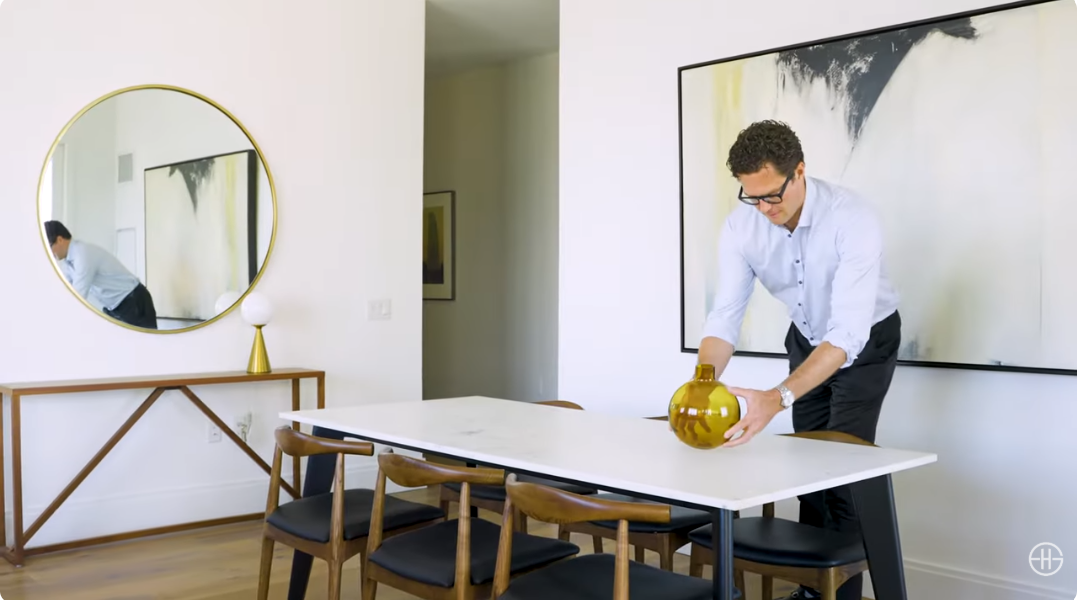
Staging is not decorating. Filling a room with nice things and calling it a day misses the point entirely.
Staging means reading a space — really reading it — and asking: what is the best possible version of this home?
What style of furniture tells the right story for these rooms? What artwork, accessories, plants, colors, and lighting bring out what’s already great about this space rather than competing with it?
That question sounds simple. It isn’t. Getting it right is a full-time obsession.
We work with a number of designers who spend every single day thinking about exactly this. And not just one designer with one aesthetic — we have different designers who each bring their own signature style to their work. Matching the right designer to the right home is part of the strategy. Because the goal is to tell the best possible story for YOUR home specifically.
What Buyers Are Actually Experiencing
Here’s something sellers don’t always realize.
When a buyer walks into a home, their brain is doing math they don’t even know it’s doing.
Every personalized object — the bold paint color, the family photos, the furniture arranged exactly the way you love it — becomes a hurdle they have to clear before they can see themselves in the space. They’re doing disqualification math. And it happens fast.
We recently sold two different units in the same section of a building. One was on a higher floor, naturally brighter. One was on a lower floor. The higher floor unit had darker walls and dimmer lighting — a moody, atmospheric vibe that the owner loved.
Multiple buyers said the lower floor felt nice and bright. They were concerned about the lighting on the higher floor.
Here’s what’s interesting. Those same buyers might prefer to make a space darker once they own it. But standing in that apartment, they weren’t imagining what they’d do with it. They were clocking the darkness as the brightest it would ever be.
That’s what an unstaged or poorly presented home costs you. Not just aesthetically. Subconsciously.
The Real Goal: Aspirational, Not Personal
When we stage a home, we’re trying to make it feel like the best version of itself. The cleanest, brightest, most inspiring version. The version that makes a buyer walk in and think — I could live here. I want to live here.
Aspirational. Not personal.
That means thinking about lighting — not just fixtures, but how light moves through the space at different times of day. It means thinking about furniture scale so rooms feel open rather than cramped. It means artwork and accessories that complement the architecture rather than fight it. Plants that add life without adding clutter. Colors that make the space feel larger, warmer, more inviting.
None of this happens by accident. It’s intentional, strategic, and it works.
The Honest Conversation About Cost
Here’s where I’ll be straight with you.
Staging costs money. It can run around 1% of the sale price — sometimes more, sometimes less, depending on what the home needs. That’s real money and I’m not going to pretend otherwise.
There’s also a logistics reality. If you’re living in the home, full staging typically means moving out. That means having somewhere to go — whether you’ve already purchased your next place, are renting short term, or are moving things into storage while the home is on the market.
These are real hurdles. I get it.
But here’s the question worth sitting with: what does skipping staging cost you?
A longer time on market. A buyer who mentally discounts the price because they’re already doing renovation math in their head. A missed connection with the buyer who would have paid top dollar — if only the home had felt like theirs the moment they walked in.
We have watched buyers step into unstaged properties and then walk back into those same properties after staging. The difference in their reactions isn’t subtle. It’s night and day.
That’s not a coincidence. That’s the work.
Best Foot Forward
Selling your home is one of the biggest financial decisions you’ll make.
The buyers who are going to pay the most for your home are out there. But they need to be able to see it — really see it — the moment they walk through the door.
Staging gives them that. It removes the friction. It tells the story. It puts your home’s best foot forward so the right buyer can walk in, look around, and think: this is it.
That’s the whole point.
Thinking about selling and want to talk through whether staging makes sense for your specific situation? Let’s have that conversation.